
Written by IshowSpeed Follow
Cristiano Ronaldo Speed Training: How CR7 Stays the Fastest at 40
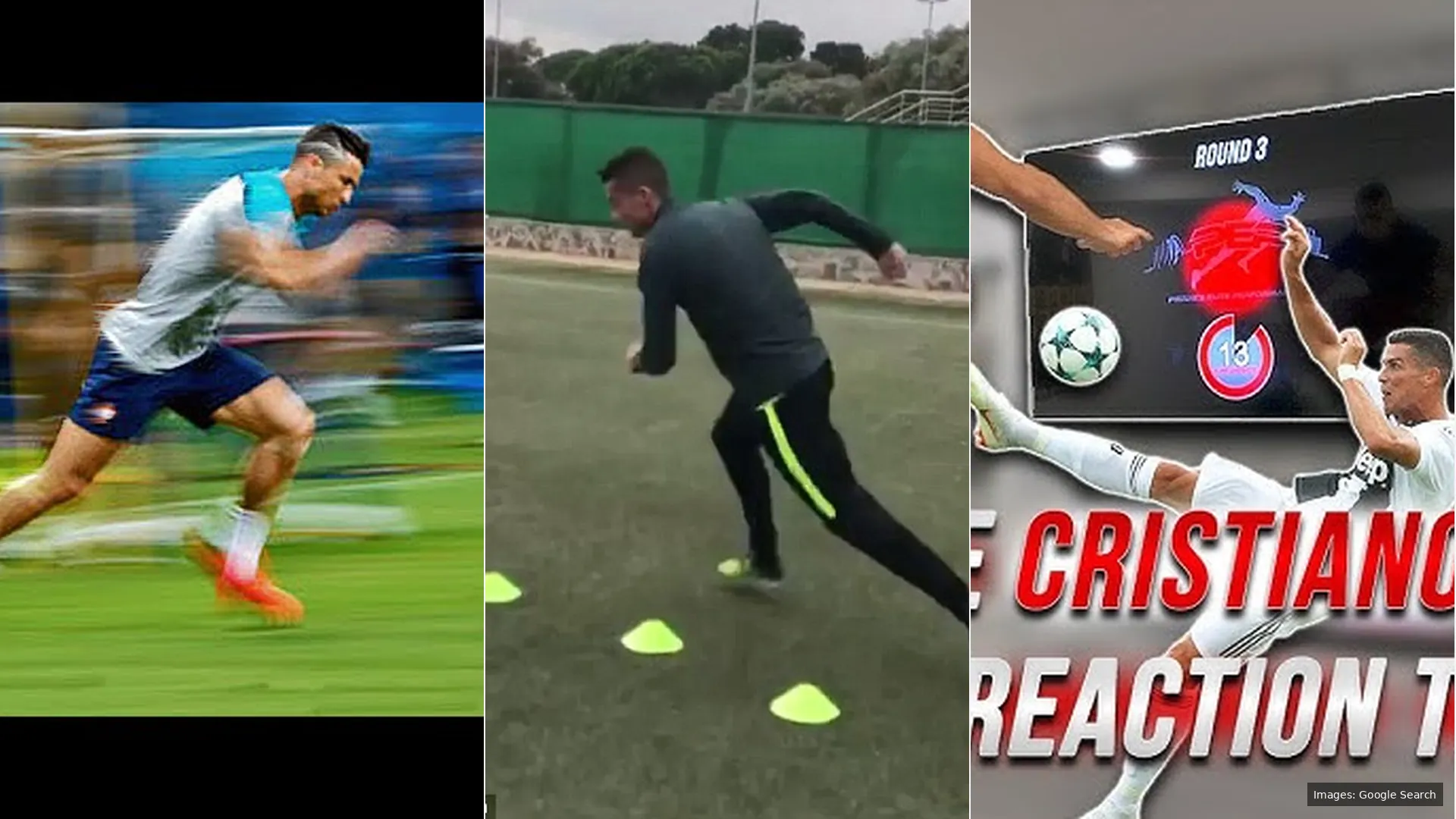
Is it possible to be lightning-fast even as you get older? When we talk about football legends, Cristiano Ronaldo’s name always comes up. He’s not just known for scoring amazing goals but also for his incredible speed.
Imagine being nearly 40 years old and still outrunning players much younger than you. This isn’t just a dream for CR7; it’s his reality. You might wonder, how does he do it?
The Ageless Wonder: Cristiano Ronaldo’s Enduring Speed
Cristiano Ronaldo is a true marvel in the world of sports. Many athletes slow down in their late twenties or early thirties. But not CR7. He seems to defy time itself.
His ability to burst past defenders or chase down a long ball is still world-class. This isn’t just luck; it’s the result of incredible dedication and smart training. You too can learn some of his secrets.
His secret lies in a very specific and intense training regimen. It focuses on making him faster, stronger, and more agile. This isn’t just about running; it’s about perfecting every tiny movement.
Understanding What Makes You Fast
Before diving into Cristiano Ronaldo speed training, let’s understand speed itself. Being fast isn’t just about how quickly you can run in a straight line. It’s much more complex than that.
Speed involves how quickly you can start moving, how fast you can reach your top speed, and how well you can change direction. It also includes how fast your brain tells your body to react. Each of these parts is a puzzle piece in becoming truly quick.
CR7 focuses on all these different pieces in his training. He works on everything from tiny muscles to his big powerful leg movements. This holistic approach makes him a complete speed demon.
The Pillars of Cristiano Ronaldo Speed Training
Cristiano Ronaldo’s training isn’t just random exercises. It’s a carefully planned routine that targets specific parts of his body and brain. He focuses on key areas to keep his speed at an elite level.
You can think of his training like building a very strong house. Each part, from the foundation to the roof, needs to be super solid. For CR7, this means working on explosive power, perfect running form, and quick reactions.
Let’s explore the main pillars that hold up his incredible speed. We’ll look at the exercises and methods he uses to stay ahead of the game. You’ll see how each type of training contributes to his overall pace.
Developing Explosive Power: The Engine Behind CR7’s Speed
Explosive power is like the engine of a race car. It’s what allows Cristiano Ronaldo to burst forward instantly, leaving defenders behind. This power comes from muscles that can contract super fast and with great force.
It’s not just about being strong; it’s about being strong quickly. CR7 trains his body to generate maximum power in a very short amount of time. This is crucial for those quick sprints and powerful jumps.
You need to train your muscles to react like a spring. When you push down, they should bounce back up with tremendous energy. This kind of training is often called plyometrics.
Plyometric Jumps: Unleashing Inner Power
Plyometric jumps are a cornerstone of Cristiano Ronaldo speed training. These exercises involve quick, powerful movements that stretch and then immediately shorten muscles. Think of your muscles like rubber bands; plyometrics teach them to snap back with more force.
These jumps help you increase your vertical jump, sprint faster, and change direction more quickly. They are excellent for developing that explosive power we just talked about. You will feel your legs getting stronger and more springy.
Here are some plyometric exercises you can try (always warm up properly first!):
- Box Jumps: You jump onto a sturdy box, landing softly, and then step down. This builds power in your legs and helps you absorb impact. Start with a low box and gradually increase the height as you get stronger.
- Squat Jumps: From a squat position, you jump as high as you can, extending your arms upwards. This targets your leg muscles and helps with overall explosiveness. Make sure to land softly, bending your knees.
- Broad Jumps: You jump forward as far as you can from a standing position. This helps with horizontal power, which is key for those long sprints down the field. Try to land gently and reset for the next jump.
- Single-Leg Hops: Hop forward on one leg, focusing on balance and power. This builds strength in each leg individually. It’s great for simulating the pushing off phase in running.
These exercises are tough but incredibly rewarding for speed development. You can learn more about proper plyometric techniques at reputable fitness sites like Bodybuilding.com’s guide to plyometrics. They will show you how to perform these exercises safely and effectively.
Mastering Movement: Sprint Mechanics and Proper Running Form
Having explosive power is fantastic, but you also need to use it efficiently. This is where sprint mechanics and proper running form come in. Cristiano Ronaldo understands that every step counts.
Running with bad form wastes energy and can even lead to injuries. You want to make sure every push-off and every stride is helping you move forward as fast as possible. This means focusing on your entire body, not just your legs.
CR7 works tirelessly on perfecting his running technique. He knows that small adjustments can make a big difference in his top speed and endurance. You can also benefit from paying attention to your form.
Sprint Mechanics: The Science of Running Fast
Sprint mechanics involve the specific way your body moves when you’re running at top speed. It’s about how your arms swing, how your knees lift, and how your feet strike the ground. Think of it as the choreography of speed.
For Cristiano Ronaldo speed training, perfect sprint mechanics are non-negotiable. He focuses on powerful arm drives, a high knee lift, and a slight forward lean. This allows him to generate maximum force and propel himself forward efficiently.
- Arm Drive: Your arms should pump powerfully back and forth, from your hip to your chin. This helps balance your body and drives your legs forward. Imagine your elbows pulling back quickly.
- Knee Drive: Lift your knees high towards your chest with each stride. This allows for a longer, more powerful push-off from the ground. High knees are a hallmark of fast sprinters.
- Body Posture: Lean slightly forward from your ankles, keeping your core tight and strong. Avoid leaning from your waist, as this can slow you down. Your head should be in line with your spine, looking straight ahead.
- Foot Strike: Aim to land on the balls of your feet, directly under your hips. This provides a powerful platform for pushing off. Landing on your heels can act like a brake, slowing you down.
Practicing these elements can dramatically improve your running efficiency. Websites like Runner’s World offer great articles on how to refine your running form. They provide visual aids and simple explanations to help you understand.
Drills for Form Improvement
To truly master sprint mechanics, you need to practice specific drills. These drills break down the running motion into smaller parts, allowing you to focus on each element. Cristiano Ronaldo uses these drills to maintain his flawless technique.
- A-Skips: This drill emphasizes high knees and powerful arm drives. You skip forward, bringing one knee up high, then quickly putting it down as the other knee comes up. It helps you get used to the coordinated movement.
- B-Skips: Similar to A-skips, but with an added “pawing” motion where your foot extends forward and then pulls back under your body. This mimics the powerful leg recovery phase of sprinting. It helps you develop a more efficient stride.
- Butt Kicks: Focuses on quick leg recovery, bringing your heels towards your glutes. This helps to reduce ground contact time and increase stride frequency. You want your feet to spend as little time as possible on the ground.
- High Knees: Running in place or slowly moving forward, bringing your knees up as high as possible. This builds hip flexor strength and improves knee drive. It’s a fundamental drill for all sprinters.
Regularly incorporating these drills into your warm-up or as standalone sessions will make a big difference. You’ll start to feel more fluid and powerful when you run. Consistency is key when it comes to improving your form.
Getting Off the Mark: Acceleration Drills
Being able to accelerate quickly is vital in football. Whether it’s chasing a loose ball or bursting past a defender, the first few steps are crucial. Cristiano Ronaldo excels at this, and it’s no accident.
Acceleration is all about generating maximum power in those initial strides. You need to overcome inertia and get your body moving from a standstill. This requires specific training that targets your fast-twitch muscle fibers.
CR7 incorporates various acceleration drills into his routine to sharpen this skill. These drills help him explode into action the moment the whistle blows or the ball drops. You can also train your body to react faster.
How to Improve Your Initial Burst
Acceleration drills focus on teaching your body to produce a lot of force quickly in a forward direction. They often involve resistance or starting from unusual positions. This helps you break through the initial stiffness of standing still.
- Falling Starts: Stand tall, then “fall” forward without moving your feet. When you feel like you’re about to fall over, burst into a sprint. This teaches you to generate power from a forward lean. It’s an excellent way to practice getting into a good acceleration position.
- Resisted Sprints (with a partner or band): A partner holds a resistance band around your waist, or you can use a weighted sled. You sprint forward against the resistance, building strength and power in your initial push. This simulates pushing off against a defender.
- Sled Pushes/Pulls: Pushing or pulling a weighted sled over a short distance. This is a fantastic full-body exercise for developing raw power and leg drive. It builds powerful glutes and hamstrings.
- Broad Jump to Sprint: Perform a broad jump, then immediately transition into a sprint. This links explosive power with forward momentum. It teaches your body to convert a jump into a powerful run.
These drills are challenging but incredibly effective for building your acceleration. You’ll notice a significant improvement in your ability to get up to speed quickly. Remember to focus on powerful, short strides initially.
Quick Feet, Quicker Mind: Agility and Reaction Time
Speed in football isn’t just about straight-line sprinting. It’s also about how quickly you can change direction, stop, and start again. This is where agility comes into play, and Cristiano Ronaldo is a master of it.
Think about evading a tackle or making a sharp turn to create space for a shot. These movements require incredible agility and a lightning-fast reaction time. Your body needs to respond instantly to what your eyes see.
CR7 trains his body and mind to be constantly alert and adaptable. He practices drills that challenge his balance, coordination, and quick thinking. You can also sharpen these crucial football skills.
Agility Ladder Exercises: Dancing Your Way to Speed
The agility ladder is a simple yet powerful tool for improving foot speed, coordination, and quick changes of direction. Cristiano Ronaldo uses ladder drills to refine his footwork and make his movements more fluid. It’s like a dance for your feet.
These exercises force you to move your feet quickly and precisely within small spaces. This translates directly to being able to control your body better on the pitch. You’ll feel more confident in tight spaces.
Here are some popular agility ladder drills:
- Ickey Shuffle: Face sideways to the ladder. Step one foot into a box, then the other. Step the first foot out, then the second foot out. Repeat quickly, moving down the ladder. This helps with lateral movement and quick foot placement.
- Two In, Two Out: Face the ladder. Step both feet into the first box, then both feet out to the side of the ladder. Step both feet into the next box, then out to the other side. This improves quick, controlled footwork.
- Single-Leg Hops (Forward & Lateral): Hop on one leg through each box, then switch legs. You can also hop sideways. This builds individual leg strength, balance, and coordination. It’s great for ankle stability.
- Carioca: Face sideways to the ladder. Step your lead foot into the box, then cross your trail foot behind it into the next box. Then, step your lead foot out of the box and cross your trail foot in front of it into the next box. It’s a complex drill but fantastic for multi-directional agility.
These drills might feel a bit awkward at first, but with practice, you’ll become much smoother. You can find many more examples and detailed instructions on sites like Nike’s agility drills section. They provide clear demonstrations.
Cone Drills for Speed: Mastering Directional Changes
Cones are another simple tool for creating challenging agility courses. They allow you to practice changing direction at different angles and speeds. Cristiano Ronaldo uses cone drills to simulate game-like situations.
These drills force you to accelerate, decelerate, and pivot sharply. This is exactly what you do constantly in a football match. You need to be able to change your mind and your direction in an instant.
- T-Drill: Set up three cones in a “T” shape. Start at the base, sprint to the middle cone. Shuffle right to the right cone, shuffle left past the middle cone to the left cone, then shuffle back to the middle. Finally, backpedal to the starting cone. This drill works on forward, lateral, and backward movement.
- L-Drill: Set up three cones in an “L” shape. Start at one end of the “L”, sprint to the middle cone, turn and sprint to the end of the “L”. Turn again and sprint back to the middle cone, then backpedal to the start. It’s excellent for sharp, ninety-degree turns.
- Box Drill/Square Drill: Set up four cones in a square. Start at one cone, sprint to the next, then shuffle, backpedal, or crossover step to the others. Vary the movement patterns for different challenges. This improves your ability to move in all directions.
- Weave Drill: Set up several cones in a zigzag pattern. Sprint through the cones, weaving in and out as quickly as possible. This simulates dribbling past defenders or running through a crowded midfield.
Remember to stay low, keep your eyes up, and explode out of each turn. The faster you can transition between movements, the quicker you’ll be on the field. Practice makes perfect with these drills.
Reaction Time Training: Thinking and Acting Fast
In football, simply being physically fast isn’t enough. You also need to react to what’s happening around you at lightning speed. This is where reaction time training becomes critical.
Cristiano Ronaldo’s ability to anticipate plays and react instantly gives him a huge advantage. He can intercept passes, get to a loose ball first, or make a quick decision under pressure. This is a skill that can be sharpened.
- Partner Ball Drop: Your partner holds a tennis ball (or similar) at shoulder height. When they drop it, you have to catch it before it bounces twice (or once, for a harder challenge). This trains your visual reaction and hand-eye coordination.
- Visual Cue Sprints: Your partner gives you a visual signal (e.g., points left or right, raises a colored cone). You have to react by sprinting in the indicated direction. This simulates reacting to a teammate’s pass or an opponent’s movement.
- Auditory Cue Sprints: Similar to visual cues, but your partner uses a verbal command or a clap. This helps you react to sounds on the field, like a whistle or a shout.
- Tennis Ball against Wall: Throw a tennis ball against a wall and react to its unpredictable bounce. This improves your agility and hand-eye coordination. You have to move quickly to catch it.
These exercises train your brain to process information faster and send signals to your muscles more quickly. This mental sharpness is a huge part of Cristiano Ronaldo’s speed. You will become more alert and responsive.
Going the Distance: Speed Endurance
Imagine sprinting at top speed for a long time, or repeatedly making fast bursts throughout a game. This requires speed endurance, the ability to maintain speed and repeat high-intensity efforts. Cristiano Ronaldo’s conditioning is legendary.
He doesn’t just sprint once; he sprints many times over 90 minutes. This means his training has to prepare him for sustained bursts of speed, even when he’s tired. You need to be able to finish strong.
Speed endurance training helps your body clear waste products that cause fatigue and teaches it to work efficiently under duress. This is crucial for playing a full match at a high level. You won’t fade in the later stages of the game.
Maintaining Pace Through the Game
Speed endurance training combines high-intensity intervals with short recovery periods. The goal is to push your body to perform at near-maximum speed, even when your muscles are burning. This builds mental toughness too.
- Repeated Sprints: Sprint 30-60 meters at 90-95% effort, then walk or jog back for recovery. Repeat 6-10 times. This simulates repeated bursts in a game. It teaches your body to recover quickly.
- Interval Training (Fartlek): Vary your running speed during a longer run. For example, sprint for 30 seconds, jog for 1 minute, then run at a moderate pace for 2 minutes. Repeat this cycle for 20-30 minutes. This helps your body adapt to different intensities.
- Shuttle Runs: Sprint between two cones (e.g., 20 meters apart) multiple times with quick turns. This builds speed endurance and sharpens your ability to change direction while fatigued. It mimics the back-and-forth movement in football.
- Conditioning Games: Playing small-sided games with fewer players on a smaller pitch. This naturally creates high-intensity, short bursts of speed, mimicking game situations. It’s a fun way to improve your endurance.
These types of workouts are tough, but they are essential for football players. They help you stay fast and effective throughout an entire match. Cristiano Ronaldo’s ability to score late goals is a testament to his speed endurance.
Measuring Progress: How CR7 Knows He’s Still Fast
How does Cristiano Ronaldo know his speed training is working? He doesn’t just guess; he measures it. Tracking progress is super important for any athlete.
It helps you see what’s improving and what needs more work. Knowing your numbers keeps you motivated and ensures your training is effective. You need to know if you’re getting faster.
Measuring Sprint Performance: The Numbers Don’t Lie
Modern technology allows athletes to precisely measure their performance. This includes sprint times, distance covered, and even acceleration rates. Cristiano Ronaldo uses these tools to monitor his body.
- Timed Sprints: The simplest way is to time yourself over a set distance (e.g., 10m, 20m, 40m). Use cones for start and finish lines. You can use a stopwatch, but electronic timing gates are more accurate. This gives you a clear number to beat.
- GPS Trackers: Wearable GPS devices track your speed, distance, and even your “load” (how much work your body is doing). Many professional footballers, including CR7, wear these in training. These devices give amazing insight into your performance.
- Video Analysis: Recording your sprints and reviewing your form can help you spot inefficiencies. You can compare your technique against elite sprinters. This visual feedback is incredibly helpful for improving mechanics.
- Vertical Jump Tests: Measuring how high you can jump gives an indication of your explosive leg power. This is directly related to your acceleration and sprint speed. A higher jump often means more powerful legs.
By consistently measuring these metrics, Cristiano Ronaldo can adjust his training to target specific areas for improvement. You can also use simpler methods to track your own progress. Consistency in measurement is as important as consistency in training.
You can learn more about sports performance tracking technology at websites like Wearable Technologies. They explain how these gadgets help athletes.
Beyond the Drills: The Unseen Elements of CR7’s Speed
While drills are crucial, Cristiano Ronaldo’s speed isn’t just built on what happens on the pitch or in the gym. There are other vital elements that support his physical prowess. These are often overlooked but are just as important.
Think of it like building a super-fast car. You need a powerful engine, but you also need high-quality fuel, regular maintenance, and a skilled driver. CR7 pays attention to all these ‘unseen’ parts.
You also need to consider your entire lifestyle, not just your workout. This holistic approach is what allows him to perform at such a high level, year after year. It’s about taking care of your whole self.
Fueling the Machine: Diet and Nutrition
What you eat is just as important as how you train. Cristiano Ronaldo famously follows a very strict and healthy diet. This provides his body with the energy it needs to train hard and recover quickly.
His diet is typically high in lean protein, whole grains, fruits, and vegetables. He avoids processed foods and sugary drinks. This clean fuel powers his body and helps his muscles repair and grow.
- Lean Protein: Chicken, fish, eggs are essential for muscle repair and growth. CR7 probably eats several small meals throughout the day to keep his protein intake high.
- Complex Carbohydrates: Whole-grain pasta, brown rice, and vegetables provide sustained energy for long training sessions. These are the fuel for your workouts.
- Healthy Fats: Avocados, nuts, and olive oil are important for overall health and hormone production. They play a vital role in keeping your body functioning well.
- Hydration: Drinking plenty of water is critical for performance and recovery. Dehydration can severely impact your speed and energy levels. CR7 is always seen drinking water.
You can find excellent resources on athlete nutrition from organizations like the Academy of Nutrition and Dietetics. They offer expert advice on how to fuel your body effectively.
The Power of Rest: Recovery and Sleep
Training hard is only half the battle; the other half is allowing your body to recover. Muscles don’t grow or get faster during the workout itself, but during the rest periods afterward. Cristiano Ronaldo prioritizes recovery.
He often talks about the importance of sleep and other recovery methods. Without proper rest, your body can’t repair itself, leading to fatigue, poor performance, and increased risk of injury. You need to give your body time to heal.
- Adequate Sleep: CR7 reportedly sleeps around 7-8 hours a night, often broken into several shorter “naps” throughout the day. Quality sleep is when most muscle repair and hormone regulation happens. Aim for at least 7-9 hours.
- Active Recovery: Light activities like walking, cycling, or swimming help increase blood flow to muscles. This aids in removing waste products and bringing in fresh nutrients.
- Stretching and Flexibility: Regular stretching improves range of motion and helps prevent muscle soreness and stiffness. Dynamic stretches before training and static stretches after are beneficial.
- Massage and Physiotherapy: Professional massages and physical therapy help with muscle recovery and injury prevention. These are often part of a professional athlete’s routine.
- Cold Baths/Ice Baths: Some athletes use cold therapy to reduce inflammation and speed up muscle recovery. It can be a shock at first, but many swear by its benefits.
You need to listen to your body and give it the rest it needs. Pushing too hard without recovery is a recipe for burnout and injury. CR7 understands that recovery is a non-negotiable part of his training.
Mental Fortitude: The Mind of a Champion
Beyond the physical, Cristiano Ronaldo’s mental strength is a huge factor in his sustained speed and success. His focus, discipline, and sheer will to win are unparalleled. The mind controls the body.
He maintains a positive mindset, visualizes success, and pushes through discomfort. This mental toughness allows him to perform at his best, even under immense pressure or when facing younger opponents. You too can train your mind.
- Discipline: Sticking to a rigorous training and diet plan, day in and day out, requires incredible discipline. CR7’s consistency is a testament to this.
- Focus: Staying fully engaged during training, concentrating on proper technique and effort. He doesn’t just go through the motions.
- Self-Belief: Believing in your own abilities and that you can achieve your goals. CR7 has immense self-confidence.
- Resilience: Bouncing back from setbacks, injuries, or poor performances. He learns from mistakes and comes back stronger.
- Goal Setting: Having clear, ambitious goals helps drive motivation and effort. CR7 is always aiming for the next record.
Developing mental strength is just as important as physical strength for any athlete. It’s what allows you to push that extra bit harder when your body wants to quit. CR7’s mind is as finely tuned as his body.
Putting It All Together: A Sample CR7-Inspired Speed Workout
Now that we’ve explored all the components, let’s put it into a sample workout. Remember, Cristiano Ronaldo has a team of experts, and his training is highly individualized. This is just an example to inspire you.
Always start with a thorough warm-up (light cardio, dynamic stretches) and end with a cool-down (static stretches). Listen to your body and adjust intensity as needed. You don’t want to get injured.
Here’s a snapshot of what a speed-focused session might look like, incorporating different elements of Cristiano Ronaldo speed training:
Warm-up (15-20 minutes)
- Light jog
- Dynamic stretches: Leg swings, arm circles, hip rotations
- Form drills: A-skips, B-skips, Butt kicks, High knees (2 sets of 10-15m each)
Main Session (45-60 minutes)
| Exercise Type | Drills & Sets | Focus |
|---|---|---|
| Explosive Power | Plyometric Jumps: | Building raw power and springiness |
| - Box Jumps (low box): 3 sets of 5 reps | ||
| - Broad Jumps: 3 sets of 5 reps | ||
| Acceleration | Starting Power: | Mastering the initial burst |
| - Falling Starts: 4 sets of 15m sprints | ||
| - Resisted Sprints (partner or band): 3 sets of 10-15m sprints | ||
| Agility & Footwork | Agility Ladder Exercises: | Quick feet, coordination, change of direction |
| - Ickey Shuffle: 2 sets down and back | ||
| - Two In, Two Out: 2 sets down and back | ||
| Cone Drills for Speed: | Sharp turns, decision making, game simulation | |
| - T-Drill: 3-4 repetitions | ||
| - L-Drill: 3-4 repetitions | ||
| Speed Endurance | Repeated Sprints: | Maintaining speed under fatigue |
| - 5-6 sets of 40m sprints (90% effort) with 60-90 seconds walk/jog recovery between sets | ||
| Reaction Time | Partner Drills: | Sharpening mental and physical response |
| - Ball Drop: 3 sets of 10 catches (partner drops ball, you catch before 2nd bounce) | ||
| - Visual Cue Sprints: 3 sets of 3-4 sprints (partner points direction, you sprint) |
Cool-down (10 minutes)
- Light jog or walk
- Static stretches (hold each stretch for 20-30 seconds): Hamstring stretch, quad stretch, calf stretch, hip flexor stretch, triceps stretch.
Remember to hydrate throughout your workout! This sample session is intense and should not be done every day. Incorporate 1-2 speed-focused sessions per week, allowing for proper recovery between them. You’ll want to mix this with other football training and strength work.
Cristiano Ronaldo’s Legacy: Inspiring Future Athletes
Cristiano Ronaldo isn’t just a football player; he’s an inspiration. His dedication to staying at the top, especially his incredible speed at an older age, shows what’s possible with hard work. He truly embodies what it means to be a professional athlete.
He proves that age is just a number if you train smart and live a disciplined lifestyle. His speed training methods are a testament to modern sports science and personal commitment. You can learn so much from his example.
His journey teaches us that continuous improvement and a never-give-up attitude are key to success, both in sports and in life. So, take a page from CR7’s book and start your own journey to better speed and fitness. You have the power to challenge yourself.
Frequently Asked Questions (FAQ)
You probably have some questions about Cristiano Ronaldo’s amazing speed and how you can apply these ideas. Here are some common questions and their answers.
H3: How old is Cristiano Ronaldo?
Cristiano Ronaldo was born on February 5, 1985. This means he will be 40 years old in 2025. It’s amazing that he maintains such high speed even at this age.
H3: What is Cristiano Ronaldo’s top speed?
Reports suggest that Cristiano Ronaldo has recorded top speeds around 34 km/h (21 mph) during matches. While not the absolute fastest recorded in football history, for his age and position, it’s incredibly impressive and among the elite. He uses his speed intelligently.
H3: Can I train exactly like Cristiano Ronaldo?
While you can adopt many of Cristiano Ronaldo’s training principles and specific exercises, training exactly like him isn’t practical for most people. He has access to world-class facilities, coaches, nutritionists, and recovery specialists. However, you can definitely incorporate the types of drills he uses into your own routine.
H3: How often should I do speed training?
For most athletes, 1-2 dedicated speed training sessions per week are sufficient. This allows your body enough time to recover and adapt to the intense demands of speed work. Overtraining can lead to injury and burnout. Listen to your body and prioritize recovery.
H3: How long does it take to improve my speed?
Improvements in speed can vary greatly depending on your starting fitness level, consistency, and the quality of your training. You might notice small improvements in a few weeks, but significant gains often take several months of consistent effort. It’s a journey, not a sprint!
H3: Is speed training only for football players?
Absolutely not! Speed training benefits athletes in many sports, including track and field, basketball, rugby, and even tennis. Developing explosive power, agility, and reaction time can enhance performance in almost any athletic endeavor. It’s a fundamental athletic skill.
H3: What is the most important part of speed training?
While all components are important, many experts agree that proper sprint mechanics and explosive power development are foundational. If your technique is good and you can generate a lot of force, you’re off to a great start. Recovery and nutrition are also super important to support this.
Check Cristiano Ronaldo Brand Products
💬 Join the Discussion
Share your thoughts with fellow Ronaldo fans!